

Chausath Yogini Temple Jabalpur sits on a hilltop above the Narmada, a few kilometres outside the city. Photos genuinely don't do it justice. Eighty-one shrines circling one courtyard — you don't really get the scale of the place until you're standing right in the middle of it.
Most people treat it as a half-day trip out of Jabalpur. Fair enough. But hardly anyone stops to think about where they're actually staying while they're out there, and that's usually the part people wish they'd planned better.

1. A city hotel puts you in the wrong direction
Whatever hotel jabalpur madhya pradesh listing shows up first is fine if you're sticking to the city centre the whole trip. Not so fine once Chausath Yogini Temple, Bhedaghat, and the Marble Rocks are all on the list for the same day. You end up driving back into town at night, then driving back out again the next morning for round two.
A property closer to Bhedaghat skips that whole loop. Temple in the morning, resort by early afternoon. No doubling back through traffic just to sleep.
2. Temples like this deserve a slower pace
This isn't a twenty-minute walkthrough kind of place, honestly. The carvings, the layout, the sheer age of it — all of it asks for a bit more time than most visitors give it. Stay somewhere quiet nearby instead of a busy city hotel and you're not clock-watching, trying to cram it all in before checkout.
A nature resort in Jabalpur close to the temple circuit lets the day breathe. See the temple properly in the morning. Come back to something calm, not another noisy street.
3. The rest of the heritage circuit isn't far off
Chausath Yogini Temple rarely sits alone on an itinerary. Most people pair it with the rani durgavati museum, or madan mahal fort a bit further into the city — this whole region is dense with Gond and Kalachuri-era history once you start digging. Staying near Bhedaghat instead of deep in the city keeps you at a reasonable distance from all of it. Not next door. Not an hour away either.
Map the order out beforehand if you can. Temple first — mornings are quieter there — then work back toward the fort and museum later.
4. When to actually go
October through March, roughly. Cooler mornings, easier walking around open stone courtyards without the summer heat fighting you the whole way. Summer trips aren't off the table, just plan an earlier start if that's your only window.And weekends get busy at the temple, so a weekday visit tends to feel a fair bit calmer if your schedule can bend that way.
5. Photography works better away from the crowds
The temple gets a decent number of visitors, especially on weekends, so early mornings are the better window if you actually want photos without a crowd in every frame. Staying nearby makes that early start realistic. Nobody's setting an alarm for 5 AM to beat traffic in from thirty kilometres out.
6. Food shouldn't be an afterthought here
Temple-adjacent areas don't usually have much in the way of proper restaurants — small roadside stalls mostly, fine for a quick bite, not quite enough after hours spent walking a hilltop site under the sun. A resort with its own working kitchen fixes this. A proper meal's waiting when you get back, instead of a search for somewhere decent to eat.
7. Good for a day trip, better as an overnight one
Plenty of people treat this as a quick stop and head straight back to the city. Fine if time's genuinely tight. But the temple, Bhedaghat, and the Marble Rocks together are worth more than a rushed afternoon squeezed between other errands.
Stay overnight nearby and you actually see all of it, instead of cramming everything into a few frantic hours before the drive home. Bonus: you're not pulling into the city late at night after a full day on your feet.
8. Getting there isn't complicated
The drive out to Bhedaghat and the temple hilltop is fairly straightforward from most of Jabalpur — decent roads, no confusing detours. Still, a local driver or a property that arranges transport saves you the hassle of figuring out parking on your own, especially the first time around.Staying closer to Bhedaghat also shortens that final stretch to the temple, which matters more than you'd guess on a hot afternoon after a morning of walking.
9. Who this suits
Couples wanting something a bit more reflective than the usual weekend spot. Families wanting to show kids an actual slice of Madhya Pradesh's history instead of another mall trip. Older visitors especially seem to appreciate the slower pace a resort stay allows, rather than rushing back to a city hotel room right after.Solo travellers working through the region's temples and forts find it useful too — a quiet base to return to after a long day of walking.
Why Dhruvtara Farms works well for A Hotel Near Chausath Yogini Temple Jabalpur
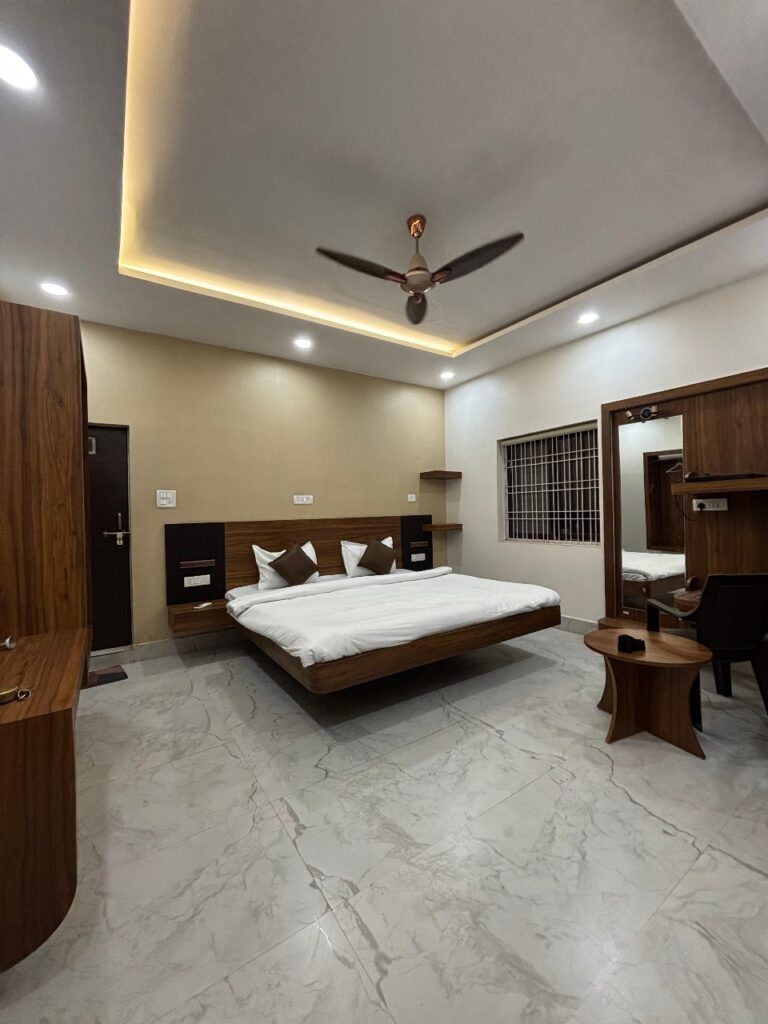
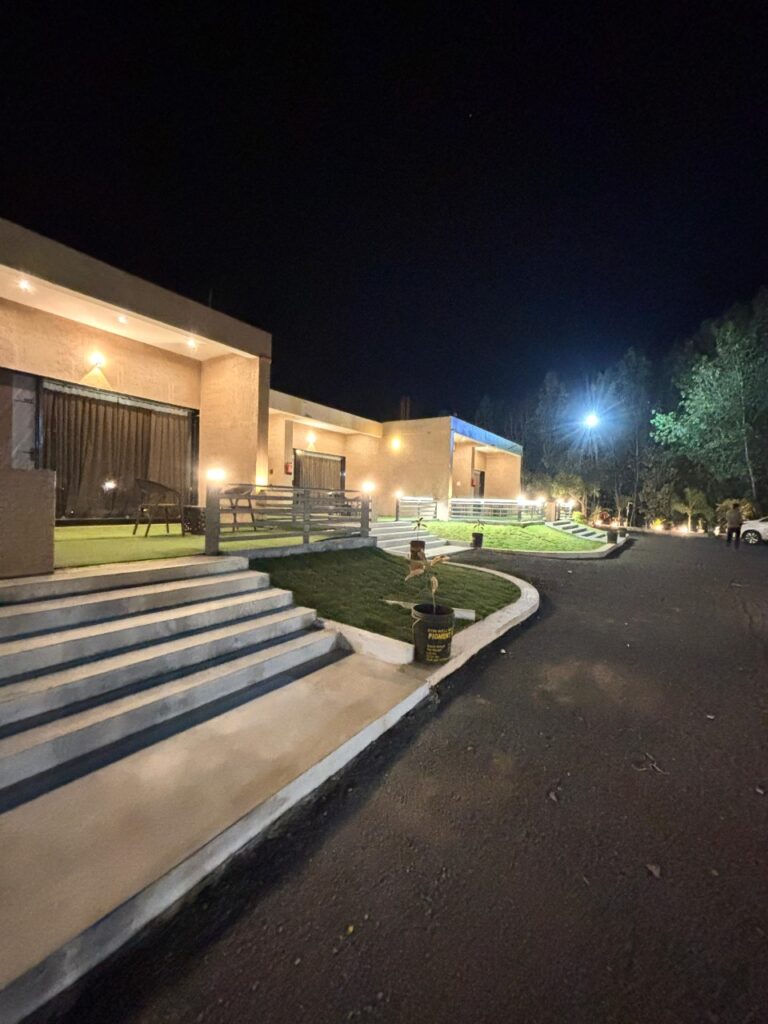
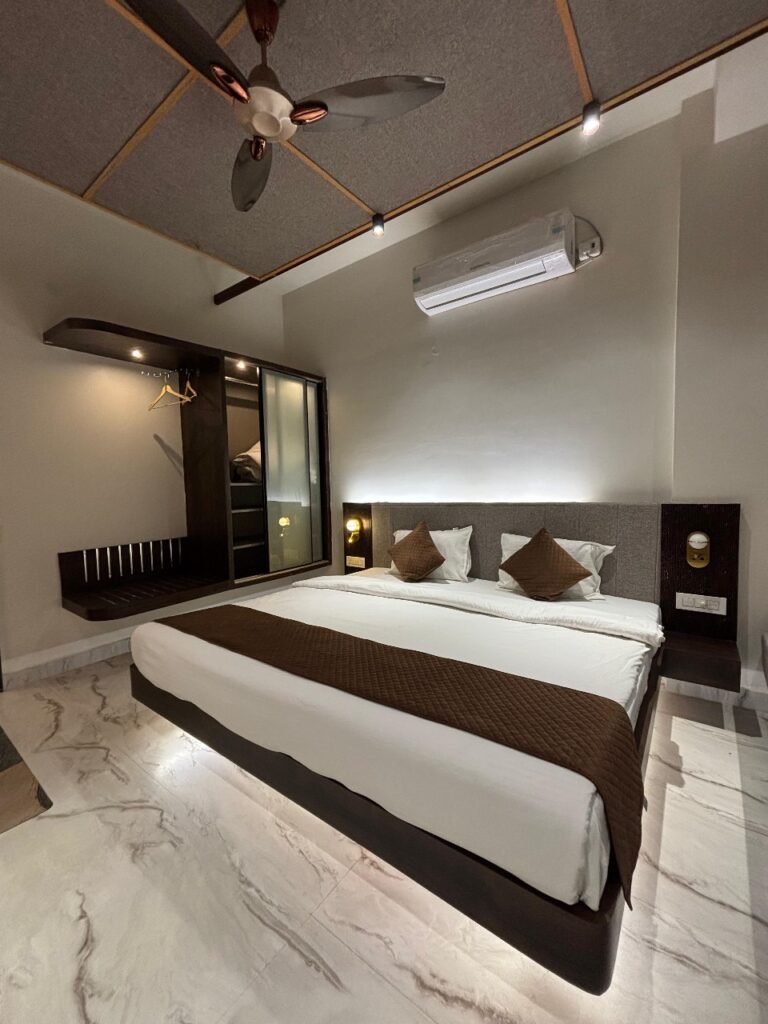
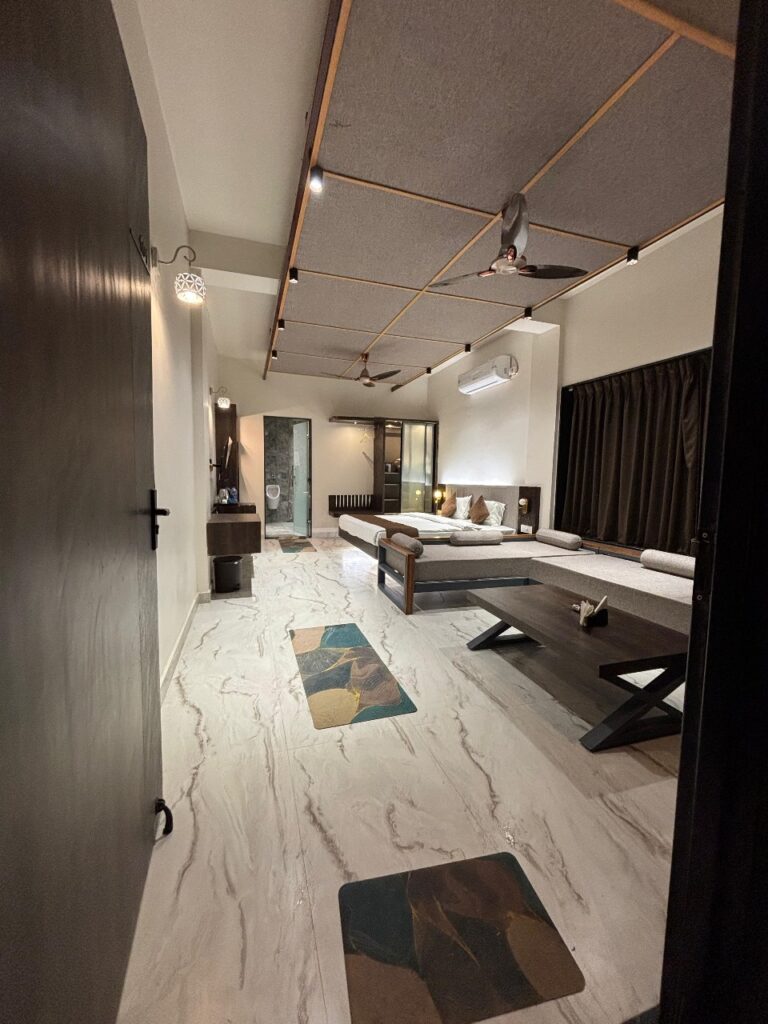
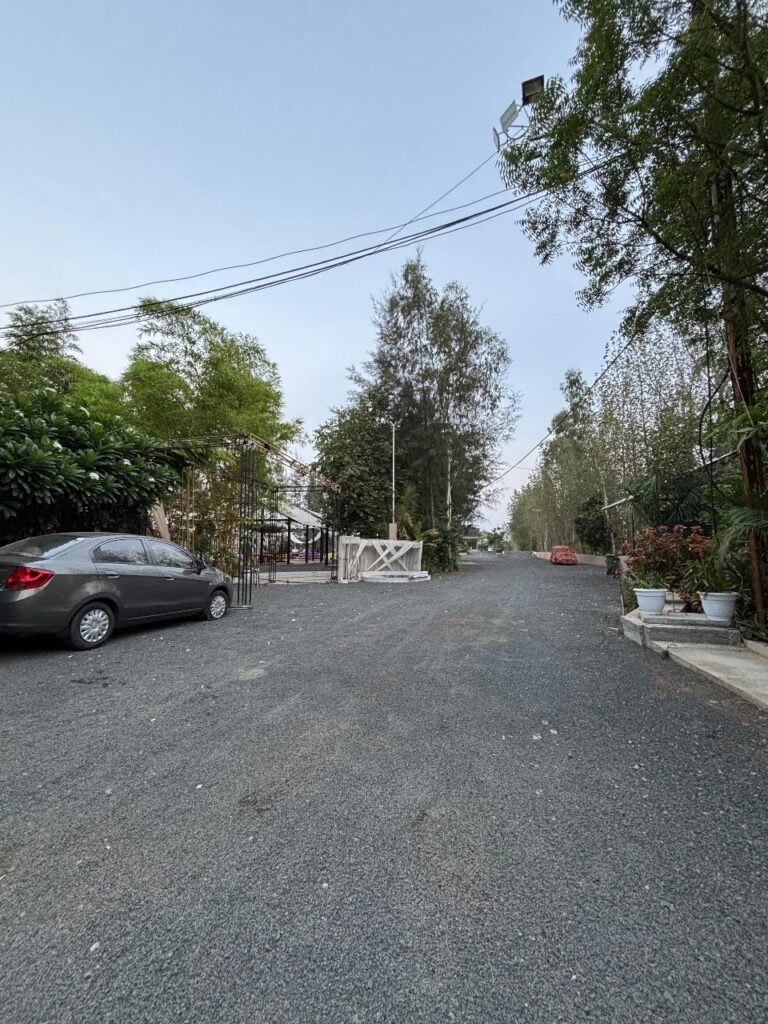
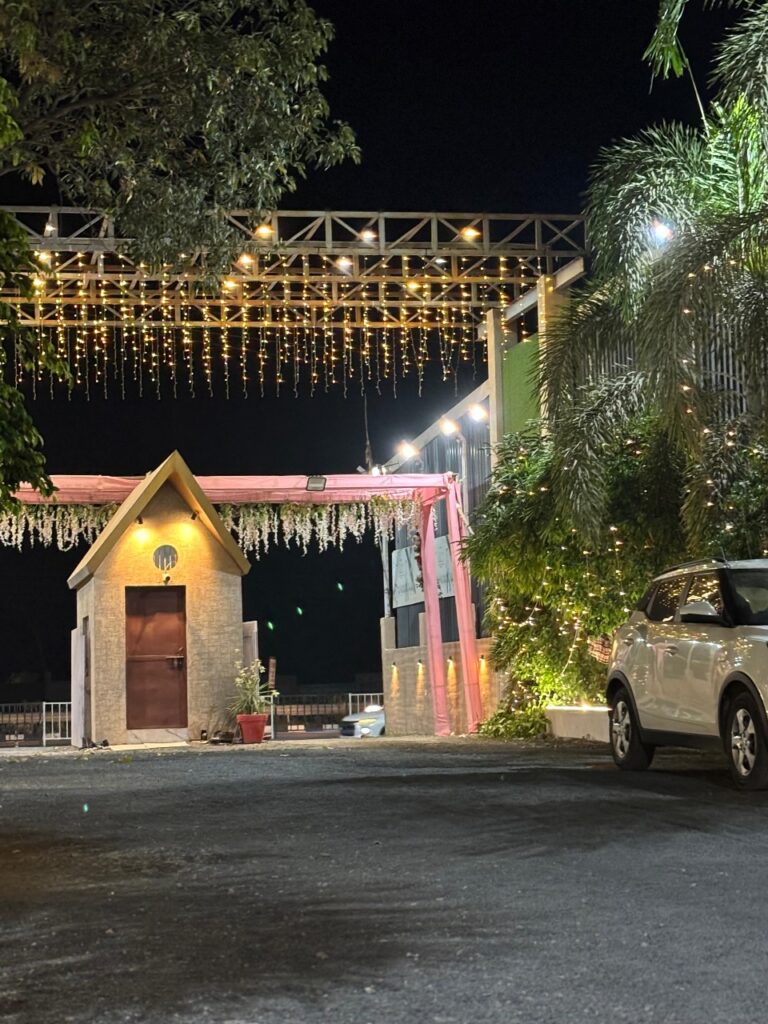
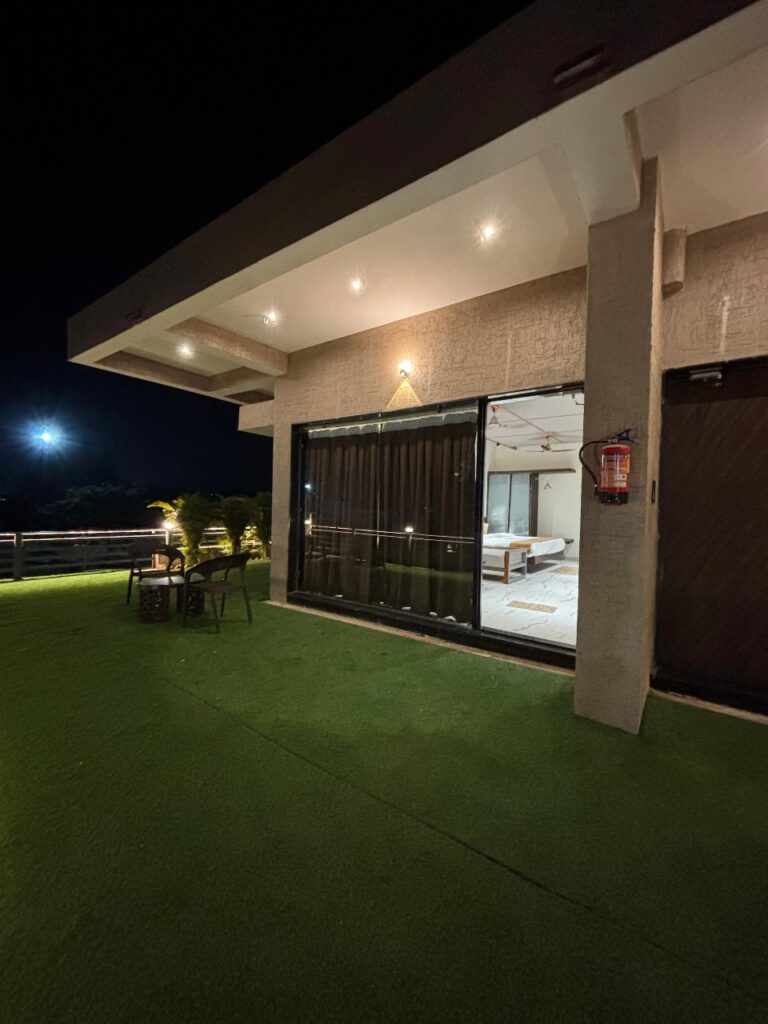
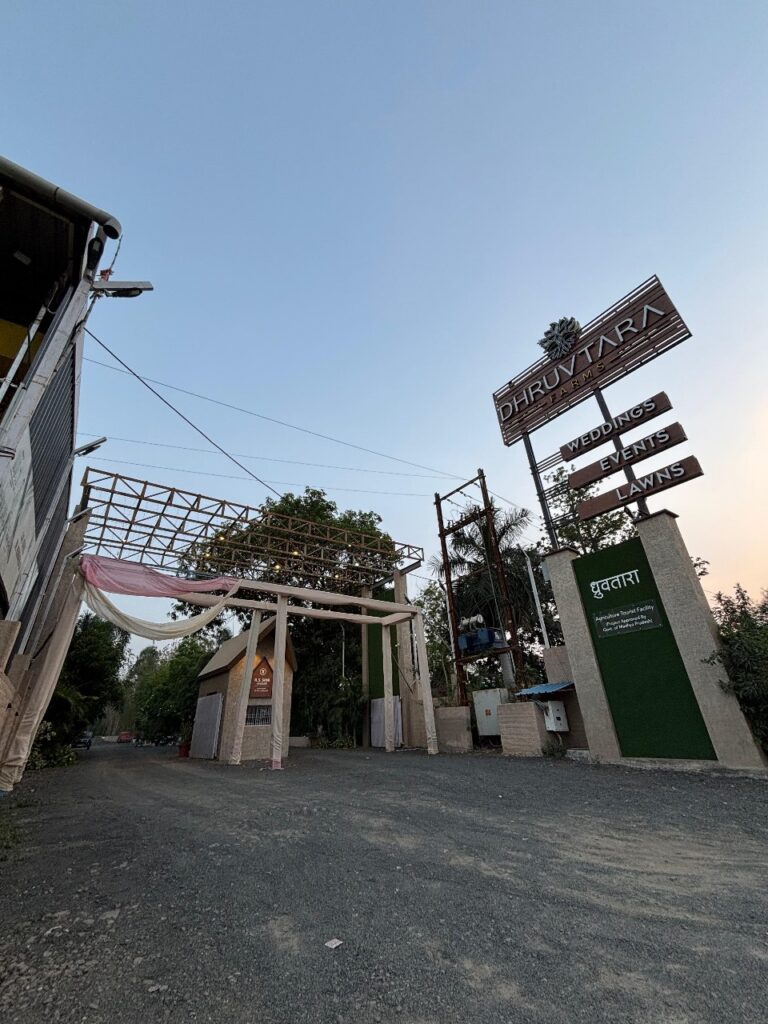
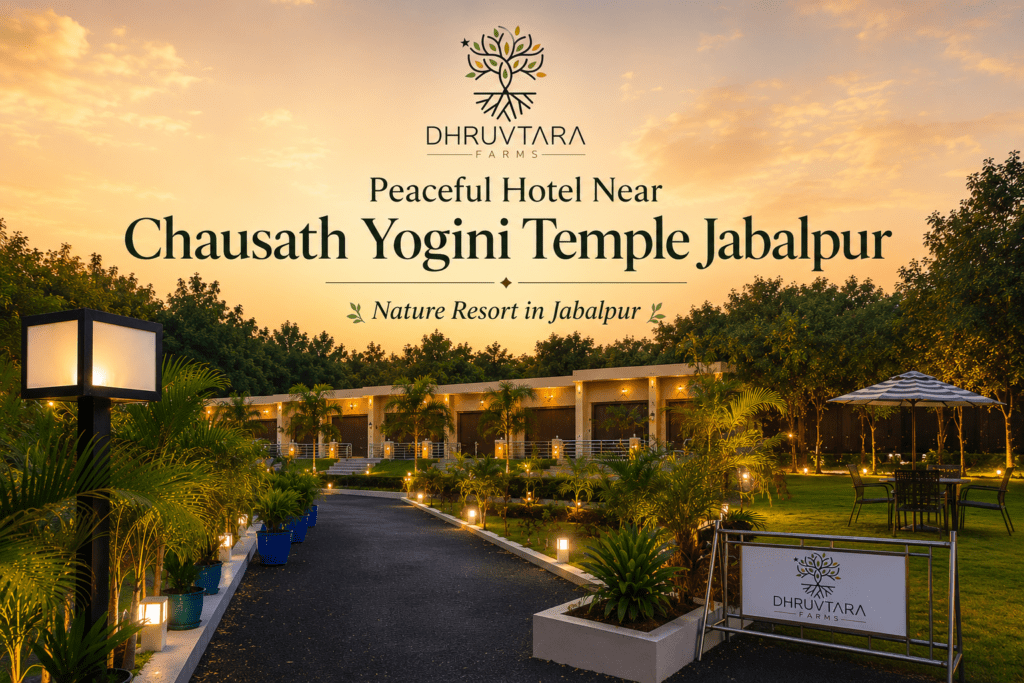
Dhruvtara Farms & Resort sits in Tewar, close enough to the Bhedaghat and Chausath Yogini Temple circuit for an easy day trip. Open lawns, a working kitchen, rooms actually built for an overnight stay rather than a quick stopover. Turns a rushed temple visit into a properly paced couple of days — heritage sites by day, quiet green land to come back to at night.
Our best places to visit in Jabalpur blog has more on pairing the temple with other nearby sites, and our Bhedaghat travel guide covers the Marble Rocks and boat rides if that's part of the plan too.
The temple's one of the more historically significant sites in the region either way — the Chausath Yogini Temple at Bhedaghat is considered one of the largest circular yogini temples in India, with 81 shrines rather than the usual 64. That's a big part of why it pulls visitors from well beyond Madhya Pradesh.
CONCLUSION - Stay closer to what you're actually there to see
The city-centre hotel jabalpur madhya pradesh listings push hardest usually isn't the smartest base for a trip built around temples. Stay nearer Bhedaghat instead, at a proper nature resort in Jabalpur with real facilities. Less driving. A calmer pace. Noticeably less rushing to fit the rani durgavati museum and madan mahal into one tight afternoon.